
ICANN 2026 Keynote Speakers
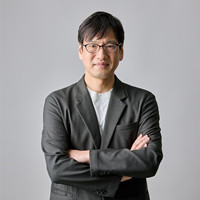
Prof. Takaaki Tomai
Tohoku University, Japan
Prof. Takaaki Tomai is a Professor
at the Frontier Research Institute for
Interdisciplinary Sciences, Tohoku
University, Japan. He received his Ph.D. in
Science from The University of Tokyo in 2008
and was awarded prestigious JSPS fellowships
for both domestic and international
research. He was appointed as an Assistant
Professor in Tohoku University in 2010. In
2023, he was appointed as a Professor in
Tohoku University. His research expertise
spans supercritical fluid chemistry,
hierarchical nanomaterials design, and
environmentally friendly chemical processes.
He is particularly known for his work on
hydrothermal and supercritical synthesis
techniques applied to energy materials,
catalysis, and carbon recycling.
Prof. Tomai leads the Nanomaterials Process
Data Science Division at Tohoku University,
where he integrates data science with
chemical process engineering to accelerate
materials discovery. His research aims to
contribute to carbon-neutral industrial
systems through innovative material
conversion technologies.
He has published more than 100 peer-reviewed
articles, with over 3,000 citations and an
h-index of 30. He serves on the editorial
board of Biochar (Springer Nature) and
actively participates in several
professional societies including the Society
of Chemical Engineers, Japan. His
interdisciplinary approach bridges
fundamental science and sustainable
innovation.
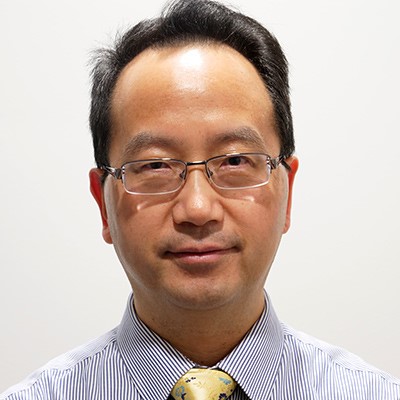
Prof. Yimin Chao
Foshan Xianhu Laboratory, China
Yimin Chao was appointed as a
Professor in the School of Chemistry at
University of East Anglia on the basis of an
established track record in investigating
nanostructured systems from the basic
physical and chemical mechanisms of
synthesis, through their optical and
electronic properties to scientific and
industrial applications. Dr Chao has a wide
range of experiences in synthesis of
nanoscale materials, analysis of their
impacts on environmental and biological
systems, and sustainable applications.
Since 2001, he has published over 100 papers
in leading international refereed journals
such as Nature Nanotechnology and Advanced
Materials. He has presented his research
results in more than 50 international
conferences, either as Plenary speaker or
Keynote speaker. Funding from the Royal
Society/Wolfson Foundation and the
University enabled the setting up of the
Sustainable Energy Innovation Laboratory of
which he is the Head. He is a Fellow of
Royal Society of Chemistry (FRSC), Chair of
Chemical Nanoscience and Nanotechnology
Network in RSC. He is serving as a member of
UKRI Future Leaders Fellowships Peer Review
College and Sift/interview Panel College,
and EPSRC Peer Review College, and also
acting as funding reviewer for various other
funding bodies, such as Leverhulme Trust,
Cancer Research UK, National Natural Science
Foundation of China, and Saudi Arabic
government. Current research themes include
design and functionalization of Si quantum
dots (Si-QDs), and their applications in
lithiun-ion batteries and thermoelectric
modules.
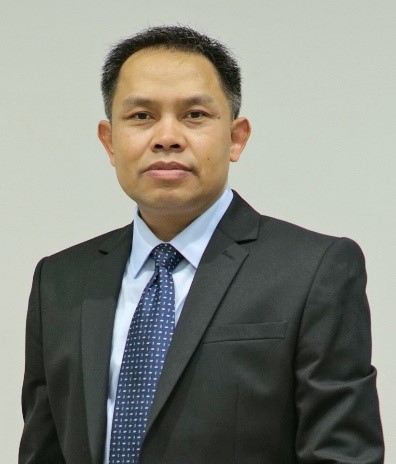
Prof. Vinich Promarak
VISTEC, Thailand
Vinich Promarak is currently a
Professor of Chemistry at VISTEC, Thailand.
He earned a D.Phil. in Organic Chemistry
from the University of Oxford, England, in
2002. Throughout his academic journey, he
was presented with many major honours and
awards, including Distinguished Professor
Research Grant (2022), Thailand’s
Outstanding Scientist Award (2021), CST High
Impact Chemist Award (2017), Outstanding
National Researcher Award (Chemical and
Pharmaceutical Science) (2016), NRCT
Outstanding Research Award (2013),
TRF-CHE-Scopus Researcher Award (Chemical
Sciences) (2013), and Thailand’s Young
Scientist Award (2007). His research
interests include the development of new
high-tech organic and organic-inorganic
materials for applications in optoelectronic
devices, i.e., organic light-emitting diode
(OLED), dye-sensitized solar cell (DSSC),
organic solar cell (OSC), perovskite solar
cell (PSC), organic field-effect transistor
(OFET), and transparent luminescent solar
concentrator (TLSC), heterogeneous catalysts
for green chemistry and biodiesel
production, and new molecular sensors and
smart sensing devices. So far, he has
contributed nearly 300 peer-reviewed
research papers.
ICANN Previous Speakers

Prof. Soon Hyung Hong
Vice President, The Korean Academy of Science and Technology (KAST), Korea
Professor, Korean Advanced Institute of Science and Technology (KAIST), Korea
Prof. Hong completed his Ph.D. in
Dept. of Materials Science and Engineering
at Northwestern University in 1984. After
R&D experience at Stanford University as a
research associate, he joined Korea Advanced
Institute of Science and Technology (KAIST)
as a professor in 1986, where he is
directing research and education on design,
fabrication processes and applications of
composites and nanocomposites. Prof. Hong
pioneered to develop global leading
technologies for fabrication processes and
applications of nanomaterials filled
multi-functional nanocomposites. Prof. Hong
has published 263 international journal
papers, registered or filed 158 patents,
delivered 72 keynote or invited talks mainly
in areas of nanomaterials and nanocomposites.
Prof. Hong had served as a Managing Director
of the Office of Strategic R&D Planning
(OSP) in the Ministry of Knowledge Economy
(MKE), Director for Basic Science and
Engineering in National Research Foundation
(NRF) of Korea, Presidents of the Korea
Society for Composite Materials (KSCM) and
the Korean Powder Metallurgy Institute
(KPMI). He currently is acting as the
President of SAMPE Korea and the Vice
President of the Korean Academy of Science
and Technology (KAST).
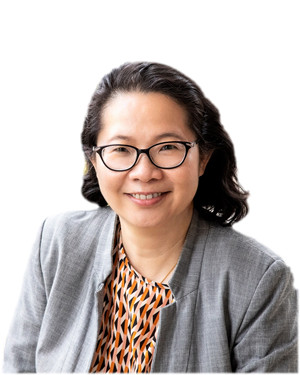
Prof. Kwang Leong Choy
Duke Kunshan University, China
Kwang Leong Choy [D.Phil. (Oxon),
DSc] is the Professor of Materials Science
at Duke Kunshan University (DKU). Prior to
this, she was a Professor of Materials
Discovery and the founding Director of the
UCL Institute for Materials Discovery at
University College London (UCL). She also
held a Chair in Materials, Faculty of
Engineering, University of Nottingham
(2002-2014), where she was the Research
Director of the University Innovation Centre
and University’s Knowledge Exchange Board.
Professor Choy earned her D.Phil. in
Materials Science from the University of
Oxford, where she was awarded the
Hetherington Prize and Oxford Metallurgical
Society Award. Additionally, she has
received accolades such as the Grunfeld
Medal Prize and Kroll Medal & Prize. She has
been awarded the Fellow of the Institute of
Materials, Mining and Minerals (FIMMM) and
Fellow of the Royal Society of Chemistry
(FRSC). She has authored over 300
publications, including 4 books and 20
patents, given over 150 keynote
papers/invited lectures and conference
session Chairman. She also helped to
establish two university spin-out companies.
Her expertise has been recognized through
Guest Professorships at the University of
Uppsala (2001/03), Ningbo Institute of
Materials Technology and Engineering (NIMTE,
2010/2012), and a Chinese Academy of
Sciences (CAS) Visiting Professorship for
Senior International Scientist (2011/2013).
She is leading a multidisciplinary research
team and collaborating closely with material
engineers, chemists, physicists,
bioengineers, nanobiotechnologists, and
engineers to create new opportunities in
materials creation, discovery and
utilization. Her team focuses on developing
high-performance, eco-friendly, and
cost-effective processes for the production
of new nanostructured materials,
nanocomposites, thin films, and coatings.
These materials find applications in various
fields, including solar cells, clean energy
generation, energy storage, electrical
systems, optoelectronics, environmental
sustainability, healthcare, and biomedicine.
Professor Choy has successfully obtained and
managed numerous multimillion-pound national
and European flagship research programs,
fostering extensive collaboration between
academia and industry. In addition, she has
established state-of-the-art nanomaterials,
innovative thin/thick film processing, and
characterization facilities, representing a
significant investment in cutting-edge
infrastructure.
%20Yu.png)
Prof. Chengzhong Yu
The University of Queensland, Australia 昆士兰大学
Dr Chengzhong Yu received his bachelor and Master’s
degrees (1990, 1993) from East China Normal
University, and his PhD from Fudan
University in 2002. He was a Professor at
the Department of Chemistry, Fudan
University till 2010. Currently he is a
professor and group leader at the Australian
Institute for Bioengineering and
Nanotechnology, the University of
Queensland, Australia.
Prof. Yu is a chemist and materials
scientist in functional nanostructured
composites and their applications. Since
2000, he has published over 260
peer-reviewed journal articles, which have
been cited over 16,900 times and resulted in
an H-index of 64. He has developed broad
industrial collaborations to extend the
applications of functional materials in a
real world. He has received several awards
including the Le Févre Memorial Prize from
the Australian Academy of Science, the ARC
Future Fellowship, and the Second prize of
the National Science Award of China (3/5).

Prof. Guozhen Shen
Institute of Semiconductors, Chinese Academy of Sciences, China 中国科学院半导体研究所
Guozhen Shen received his MS degree
in 1999 from Anhui Normal University and Ph.
D degree in 2003 from University of Science
and Technology of China. From 2004 to 2013,
he conducted his research in Hanyang
University (Korea), National Institute for
Materials Science (Japan), University of
Southern California (USA) and Huazhong
University of Science and Technology
(China). He joined Institute of
Semiconductors, Chinese academy of Sciences
as a professor in 2013. His current research
focuses on flexible electronics and
printable electronics. He has published more
than 300 papers with an H-factor of 79. He
received several important awards, including
the Research Fund for Distinguished Young
Scientists, Mao Yi-Sheng Science and
Technology Awards, Science and Technology
Award of C-MRS,
etc.

Prof. Yonghui Deng
Fudan University, China 复旦大学
Prof. Yonghui Deng received his B.S. in chemistry from Nanchang University (2000) and Ph.D in polymer chemistry and physics from Fudan University (2005). He worked as a postdoctoral researcher with Prof. Dongyuan Zhao (2005–2007), and was promoted as associate professor (2007) and full professor (2011) in Department of Chemistry at Fudan University. He worked in University of California at Berkeley (2009–2010) as visiting scholar. He has coauthored over 120 papers in refereed journals with total citation over 8000 times and h-index of 46. He received the second prize of Natural Science Award of Ministry of Education (the first awardee), the National Science Fund for Excellent Young Scholars by NSFC, the National “Youth Top-notch Talent Support Program, and Youth Cheung Kong Professor” by Ministry of Education. He is currently the acting associate editor of Chinese Chemical Letters (SCI indexed) and the assessor of Australian Research Council (ARC). His research interests include functional porous materials, core–shell nanomaterials, and their applications in catalysis, chemical sensor, biomedicine, etc.
Copyright © ICANN All rights reserved.